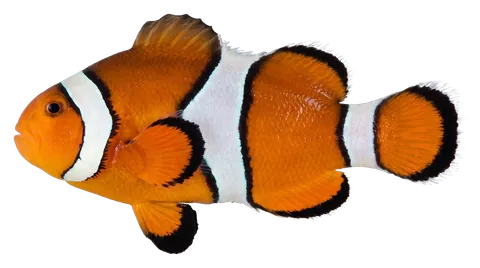
Percula clownfish
Amphiprion percula
The bold-striped twin of the ocellaris, and even more territorial.
The Percula clownfish (Amphiprion percula) is a tropical marine fish of the family Pomacentridae. It lives on and around reefs, between 1 and 15 m deep. Adults grow to about 7 cm; the largest on record measured 11 cm (total length). In the aquarium it needs a tank at least 75 cm long and water at 23–27 °C.
- Size
- 7 cm
- Smallest tank
- 75 cm
- Temperature
- 23–27 °C
- Care
- Easy
In the aquarium
Temperature23–27 °C
pH7.8–8.5
- Temperament
- Semi-aggressive
- Diet
- Omnivore
- Activity
- Moderate
- Water layer
- Mid water
- Group
- Lives on its own
- Coral
- Reef safe
These values are compiled from real species data, and the LumaReef simulation is built to keep them true to life.
Which tank it fits
- Nano60 cm · 65 litresToo small
- Standard90 cm · 180 litres18 of them
- Wide120 cm · 300 litres30 of them
- Living room180 cm · 650 litres65 of them
- Showcase250 cm · 1,200 litres120 of them
- Gallery300 cm · 1,440 litres144 of them
Who it lives with
Gets along56 species
- Green chromis
- Blue damselfish
- Carpenter's flasher wrasse
- Purple firefish
- Court jester goby
- Royal gramma
- Scooter dragonet
- Swissguard basslet
- Chalk bass
- Pajama cardinalfish
- Yellowstriped cardinalfish
- Yellow watchman goby
- Fire goby
- Tailspot blenny
- Mandarinfish
- Talbot's damselfish
- Pink skunk clownfish
- Springer's damselfish
- Flame wrasse
- Neon goby
- Yasha goby
- High-fin shrimpgoby
- Randall's shrimpgoby
- Dispar anthias
Caution43 species
Both semi-aggressive
- Cherub angelfish
- Sixline wrasse
- Falco hawkfish
- Orchid dottyback
- Banggai cardinalfish
- Clownfish
- Yellowtail damselfish
- Azure damselfish
- Flame hawkfish
- Bartlett's anthias
- Rusty angelfish
- Canary blenny
- Striped fang blenny
- Neon dottyback
- Flame angelfish
- Coral beauty angelfish
- Potter's angelfish
- Mystery wrasse
- Blackcap basslet
- Clarkii clownfish
- Valentini puffer
- Tomato clownfish
- Lemonpeel angelfish
- Bicolor angelfish
- Scott's fairy wrasse
- Midas blenny
- Longnose hawkfish
- Kole tang
- Yellow tang
- Scopas tang
- Convict tang
- Raccoon butterflyfish
- Dwarf lionfish
- Squarespot anthias
- Threadfin butterflyfish
- Engineer goby
- Sailfin tang
- Naso tang
- French angelfish
- Porcupine puffer
- Volitans lionfish
- Niger triggerfish
Narrow shared temperature range
In the wild
- Water type
- Marine
- Climate zone
- Tropical
- Habitat
- Coral and rocky reefs
- Largest on record
- 11 cmtotal length
- Aquarium trade
- Traded commercially
Depth
surface
1 m15 m
Conservation status
Classification
- OrderBlenniiformes
- FamilyPomacentridae
- GenusAmphiprion
- SpeciesAmphiprion percula
- Described byLacépède, 1802
In other languages
- English
- Percula Anemonefish
- German
- Echter Clownfisch
- Spanish
- Pez Payaso del Este
- French
- Poisson-clown du Pacifique
- Italian
- Pesce pagliaccio orientale
- Russian
- Оранжевый амфиприон
Quick answers
- Percula clownfish size: how big does it get?
- Adults reach about 7 cm. The largest on record measured 11 cm (total length). Record sizes among the 12 Amphiprion species on LumaReef: 10 cm (Pink skunk clownfish) to 17 cm (Maroon clownfish).
- Percula clownfish tank size: what is the minimum?
- A tank at least 75 cm long. In LumaReef that is the Standard tank or larger.
- Percula clownfish water parameters: what does it need?
- Temperature 23–27 °C, pH 7.8–8.5. Close to what most Amphiprion on LumaReef need (23–27 °C).
- Percula clownfish tank mates: what can it live with?
- It gets along with 56 of the 99 reef species in the catalogue, such as Green chromis, Blue damselfish, and Carpenter's flasher wrasse.
- Percula clownfish: alone or in a group?
- It can be kept on its own.
- Percula clownfish and corals: is it reef safe?
- Yes, it leaves corals alone.
- Percula clownfish depth: how deep does it live?
- In the wild, 1 to 15 m down. Shallower than most Amphiprion on LumaReef (1–25 m).
Similar species
 ClownfishAmphiprion ocellaris
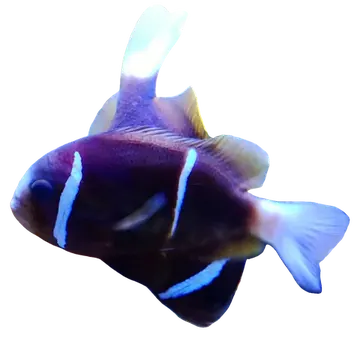 Barrier Reef AnemonefishAmphiprion akindynos
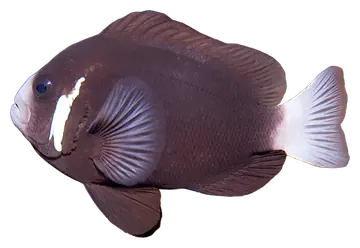 McCulloch's AnemonefishAmphiprion mccullochi
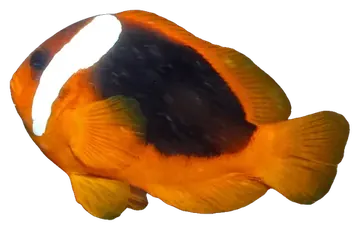 Australian AnemonefishAmphiprion rubrocinctus
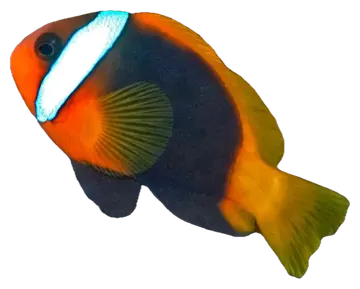 Blackback AnemonefishAmphiprion melanopus
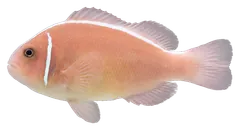 Pink skunk clownfishAmphiprion perideraion
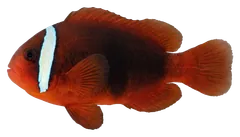 Tomato clownfishAmphiprion frenatus
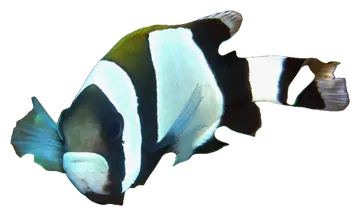 Wideband AnemonefishAmphiprion latezonatus
Sources
Percula clownfish: compiled from these references.